
Focus on Competition
Technically Speaking ...
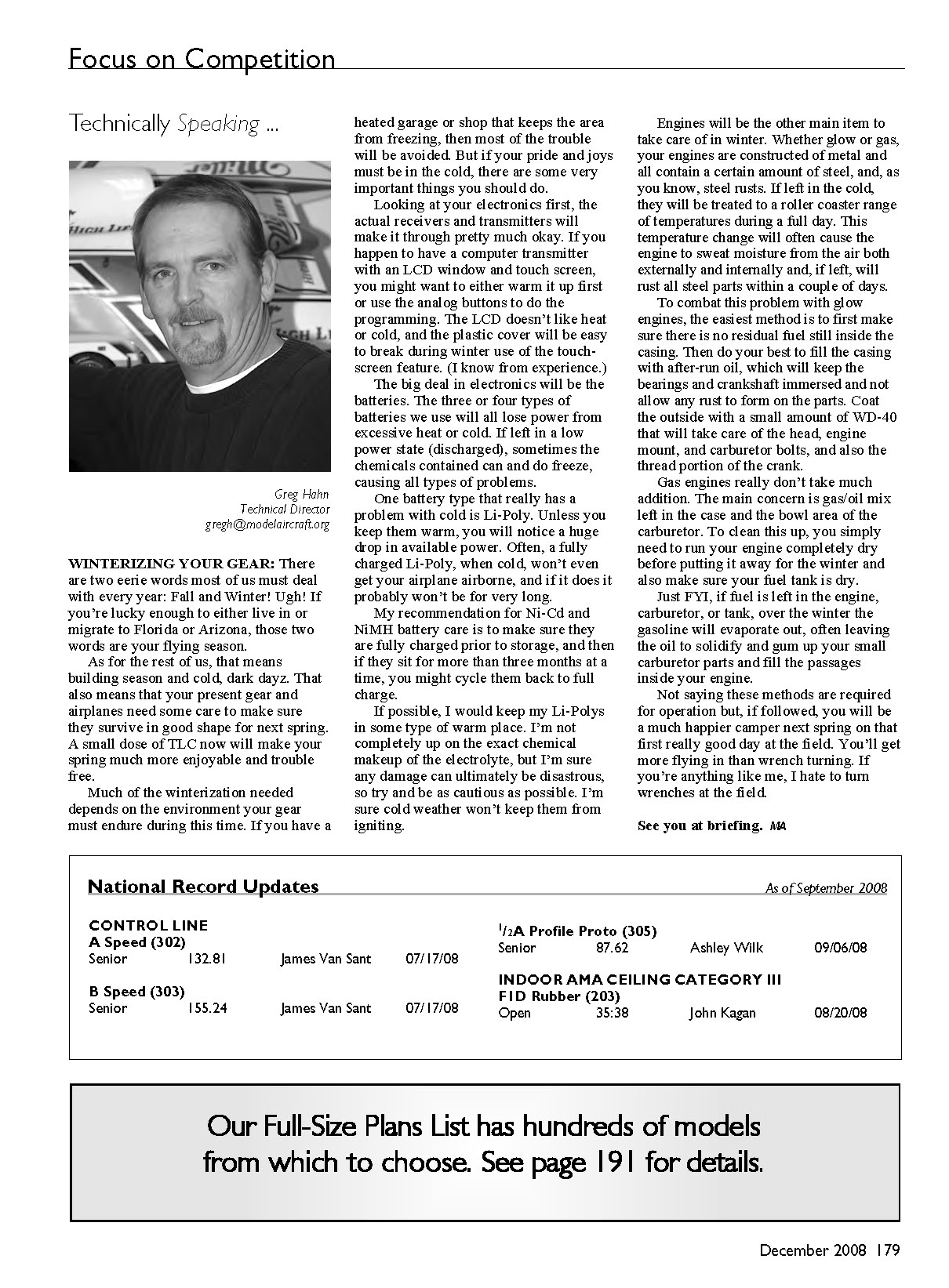
Greg Hahn Technical Director gregh@modelaircraft.org
Winterizing Your Gear
There are two eerie words most of us must deal with every year: Fall and Winter! Ugh! If you're lucky enough to either live in or migrate to Florida or Arizona, those two words are your flying season.
As for the rest of us, that means building season and cold, dark days. That also means that your present gear and airplanes need some care to make sure they survive in good shape for next spring. A small dose of TLC now will make your spring much more enjoyable and trouble free.
Much of the winterization needed depends on the environment your gear must endure during this time. If you have a heated garage or shop that keeps the area from freezing, then most of the trouble will be avoided. But if your pride and joys must be in the cold, there are some very important things you should do.
Electronics
Looking at your electronics first, the actual receivers and transmitters will make it through pretty much okay. If you happen to have a computer transmitter with an LCD window and touchscreen, you might want to either warm it up first or use the analog buttons to do the programming. The LCD doesn't like heat or cold, and the plastic cover will be easy to break during winter use of the touchscreen feature. (I know from experience.)
The big deal in electronics will be the batteries. The three or four types of batteries we use will all lose power from excessive heat or cold. If left in a low power state (discharged), sometimes the chemicals contained can and do freeze, causing all types of problems.
Batteries
- Li-Poly: One battery type that really has a problem with cold is Li-Poly. Unless you keep them warm, you will notice a huge drop in available power. Often, a fully charged Li-Poly, when cold, won't even get your airplane airborne, and if it does it probably won't be for very long. If possible, keep Li-Polys in some type of warm place. I'm not completely up on the exact chemical makeup of the electrolyte, but I'm sure any damage can ultimately be disastrous, so try and be as cautious as possible. I'm sure cold weather won't keep them from igniting.
- Ni-Cd and NiMH: My recommendation for Ni-Cd and NiMH battery care is to make sure they are fully charged prior to storage, and then if they sit for more than three months at a time, you might cycle them back to full charge.
Engines
Engines will be the other main item to take care of in winter. Whether glow or gas, your engines are constructed of metal and all contain a certain amount of steel, and, as you know, steel rusts. If left in the cold, they will be treated to a roller-coaster range of temperatures during a full day. This temperature change will often cause the engine to sweat moisture from the air both externally and internally and, if left, will rust all steel parts within a couple of days.
To combat this problem:
#### Glow Engines
- Make sure there is no residual fuel still inside the casing.
- Fill the casing with after-run oil, which will keep the bearings and crankshaft immersed and not allow any rust to form on the parts.
- Coat the outside with a small amount of WD-40 to protect the head, engine mount, carburetor bolts, and the thread portion of the crank.
#### Gas Engines
- The main concern is gas/oil mix left in the case and the bowl area of the carburetor.
- Run your engine completely dry before putting it away for the winter and also make sure your fuel tank is dry.
Just FYI, if fuel is left in the engine, carburetor, or tank, over the winter the gasoline will evaporate out, often leaving the oil to solidify and gum up your small carburetor parts and fill the passages inside your engine.
Final Tips
Not saying these methods are required for operation but, if followed, you will be a much happier camper next spring on that first really good day at the field. You'll get more flying in than wrench turning. If you're anything like me, I hate to turn wrenches at the field.
See you at briefing. MA
Transcribed from original scans by AI. Minor OCR errors may remain.

